year: Year 1
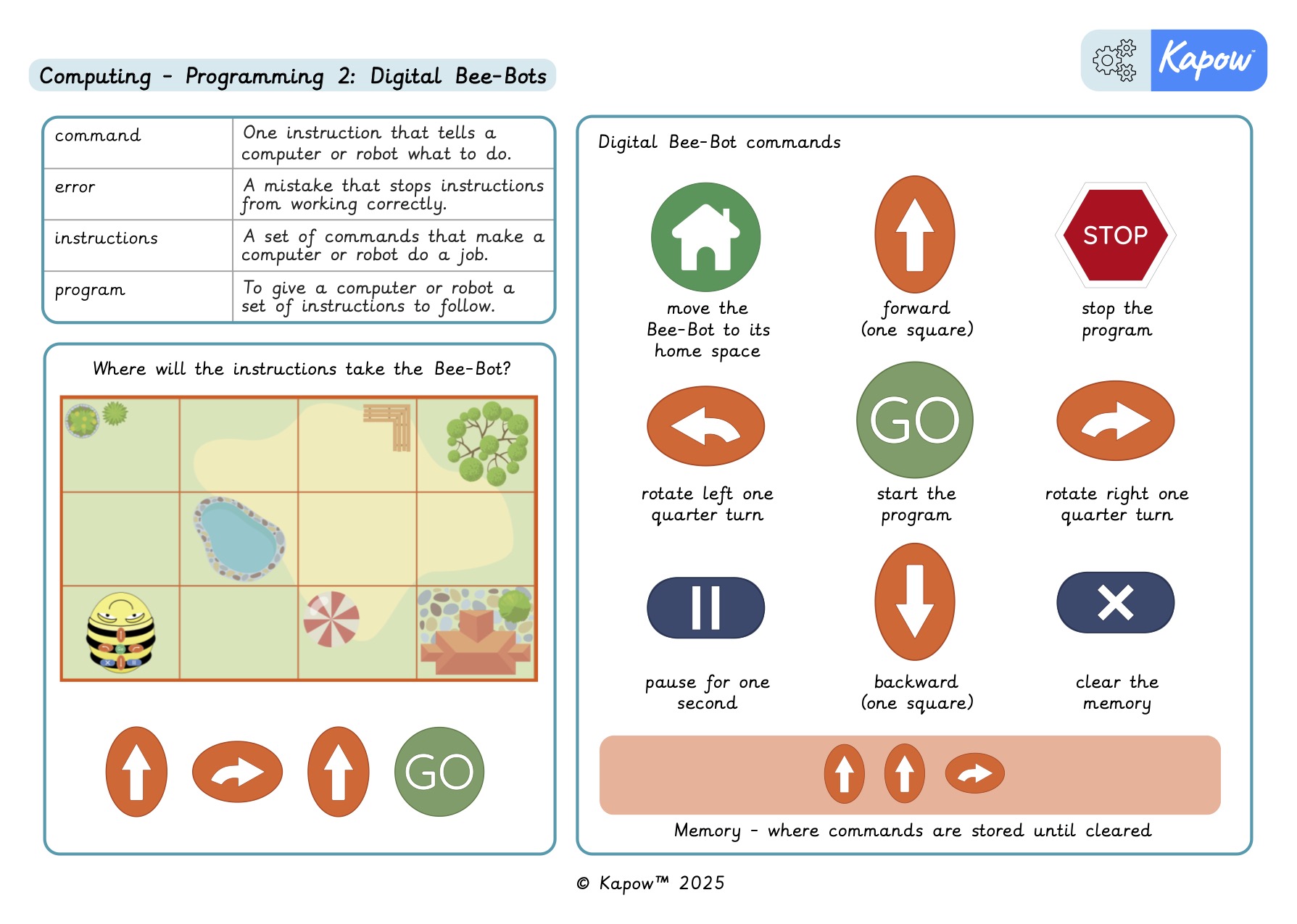
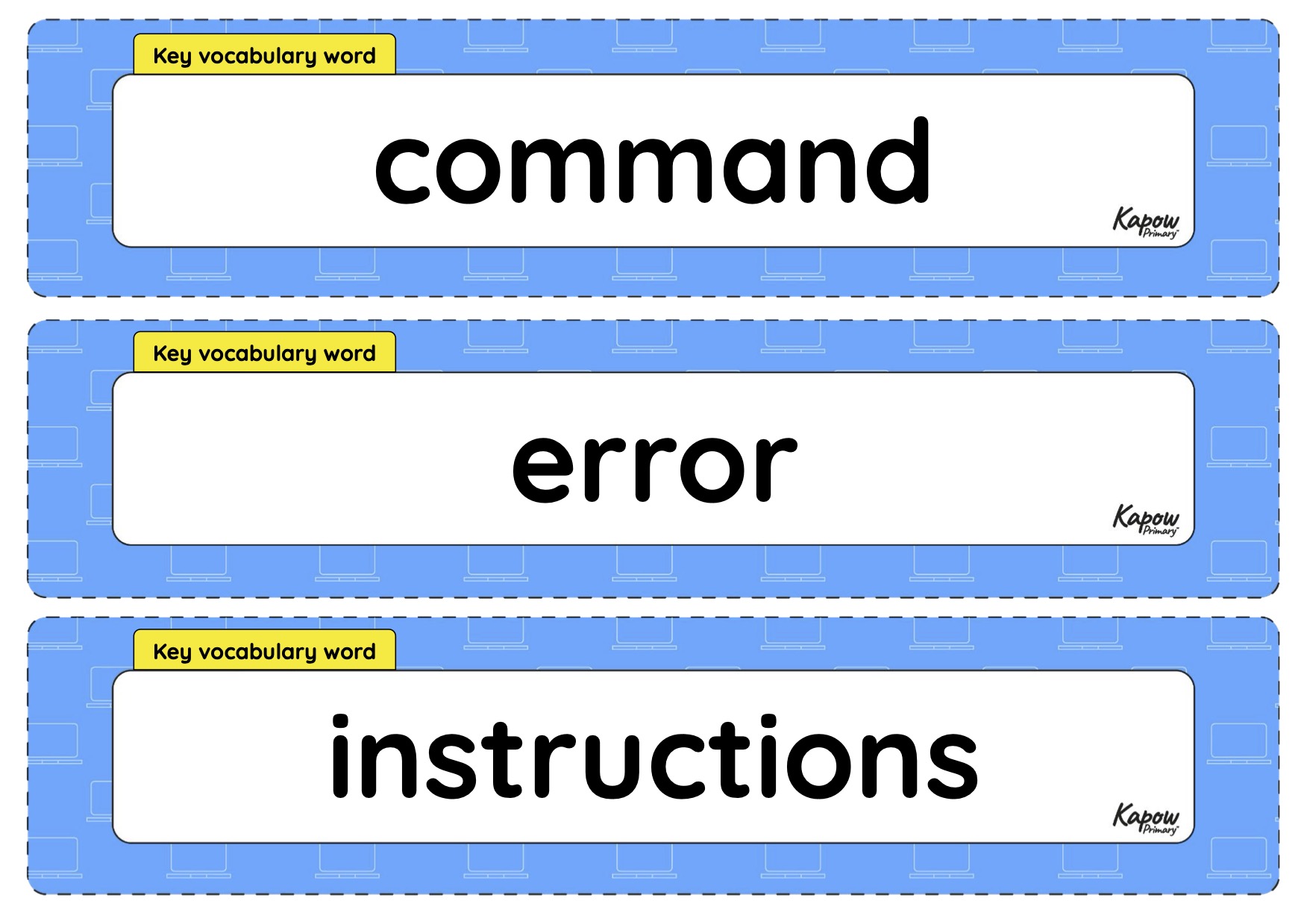
Vocabulary display – Computing Y1: *New* Programming 2: Digital Bee-Bots
Pupil video: Properties of materials
Materials can be described by their properties. Some are waterproof, meaning they stop water getting through.
R&W: Curriculum guide for parents and carers — condensed
R&W: Curriculum guide for parents and carers — mixed-age (Cycle B)
Pupil video: Sight
Pupil videos: Guess the sounds
Teacher video: Posing a historical question
This History video introduces teachers to the use of key inquiry questions in the Kapow Primary History scheme, which lead to sub-questions in each lesson to support children’s investigations. Closed questions can be useful for testing recall and assessing understanding, while open questions promote curiosity and deeper thinking. From Key Stage 1, it is important for pupils to have opportunities to ask their own questions, using the five W’s and one H to guide them. These can be extended with prompts like what if, when did, or where would to encourage more effective questioning.
This video is part of Kapow Primary’s History scheme – questions. It supports teachers in helping pupils understand how questioning develops historical thinking. Questions such as “When did it happen?” build chronological awareness, while “Why did it happen?” and “What was the result?” develop understanding of cause and consequence. In this lesson, pupils interview an older visitor to learn about the past through oral history. Teachers should prepare the visitor, help children plan questions, and record the interview to avoid pupils losing focus while writing notes. The recording can then be revisited in lesson five to extend learning and analysis.
Pupil video: My life timeline
This Kapow pupil video is part of the Kapow History scheme of work. A timeline is a line that shows events in the order they happened, helping us see the passing of time. The word past describes events that have already happened, while present is what is happening now. We always start by looking at now at the end of the timeline, then look backwards to see the past. Because the past is so long, we can’t fit it all on a timeline, so we use an arrow to show it continues.
To create a timeline of your life, begin with your date of birth at the start. Then add important events, such as when you started school, got a new pet, or moved into Year 1. By placing these events in order, you can see how your life has progressed from the past to the present