




- Subjects >
- Science >
- Reception >
- Reception units >
EYFS outcomes
Development matters
Understanding the world
- Explore the natural world around them.
- Describe what they see, hear and feel whilst outside.
See Development Matters (non-statutory curriculum guidance) – contains public sector information licensed under the Open Government Licence v3.0.
Early learning goals
ELG: Understanding the world – The natural world
- Explore the natural world around them, making observations and drawing pictures of animals and plants.
- Understand some important processes and changes in the natural world around them, including the seasons and changing states of matter.
See Statutory framework for the early years foundation stage.
Teacher video: Our beautiful planet

Lessons
Lesson 1: Exploring outdoors

Lesson 2: Plants
Lesson 3: Exploring plant parts
Lesson 4: Planting seeds
Lesson 5: Caring for the Earth
Key skills
- Commenting on what they

This content is for subscribers only. Join for access today.
Key knowledge
To know:
- Some objects
This content is for subscribers only. Join for access today.
Key vocabulary
care
Earth
This content is for subscribers only. Join for access today.
Continuous provision
Equipment list
Equipment needed across all lessons in this unit.
This list does not include equipment which is usually readily available in the classroom (e.g pencils, A4 paper etc)
 Download
Full equipment list for the subject
Quantities marked × will update. Items without quantities are unaffected
-
Natural materials, such as plant parts, twigs, stones, feathers and pine cones.
×8 -
Large trays
×5 -
Access to a variety of flowering plants on or near the school grounds.
-
3 teddies or dolls with visible signs of illness or injury
-
Flowering plants with their leaves and roots intact
×5 -
Mud kitchen (or a large tray if not available).
×1 - Pestle and mortar ×1
-
Safety knives
×8 - Bowls ×8
- Wooden spoons ×15
- Selection of plants bulbs and seeds ×15
-
Craft materials, e.g. googly eyes and pipe cleaners.
×8 -
Transparent plastic cups
×30 - Compost ×1
- Spoons ×8
-
Grass seeds
×1
The equipment below is optional
- Clipboards ×15
- Devices to take photos ×8
- Magnifying glasses ×30
- ‘Errol’s Garden’ storybook by Gillian Hibbs ×1
-
Pages from gardening magazines
×15 -
A4 green paper
×30 -
Squeezy bottles of blue and green poster paint.
×8 - Paper plates ×30
- A4 medium-weight card ×30
This content is for subscribers only. Join for access today.
Related content
Unit resources

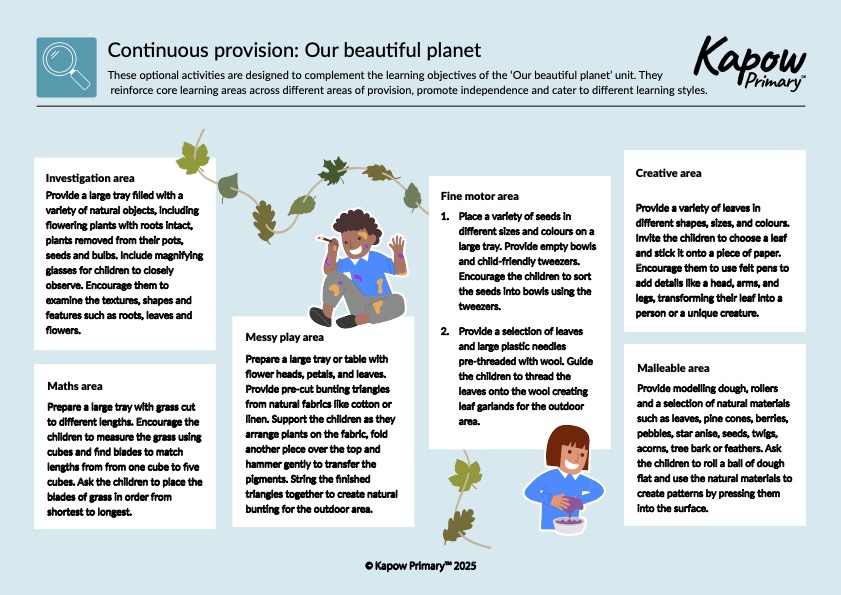
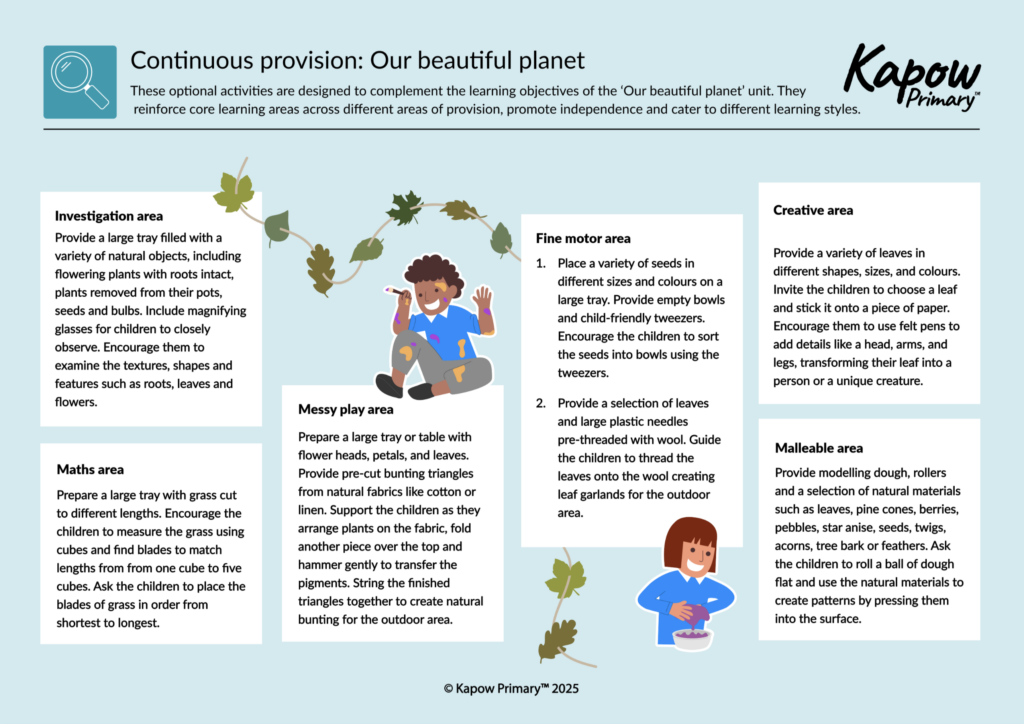
Continuous provision ideas – Science EYFS: Our beautiful planet
Continuous provision activities to complement the EYFS unit 'Our beautiful planet'.
Subject resources
This content is for subscribers only. Join for access today.
