




This unit has been refreshed for 2024/25
We hope you enjoy the new, improved lessons.
Unit outcomes
Pupils who are secure will be able to:
- Make inferences and deductions from primary and secondary sources.
- Explain why children needed to work.
- Identify the jobs Tudor and Victorian children had.
- Describe the working conditions of Tudor and Victorian children.
- Identify how Lord Shaftesbury changed the lives of children and evaluate the impact of his work.
- Use sources to identify leisure activities and compare them over time.
- Identify diseases past children suffered from and discuss how effective the treatments were.
Suggested prior learning
Y3/4 (A): British history 3: What changed in Britain after the Anglo-Saxon invasion?
Get started
Lessons
Y3/4 (B): Lesson 1: What do sources tell us about how children’s lives have changed?
Y3/4 (B): Lesson 2: Why did Tudor children work and what was it like?
Y3/4 (B): Lesson 3: What were children’s jobs like in Victorian England?
Y3/4 (B): Lesson 4: How did Lord Shaftesbury help to change the lives of children?
Y3/4 (B): Lesson 5: How and why has children’s leisure time changed?
Y3/4 (B): Lesson 6: What were the diseases children caught and how were they treated?
Key skills
- Understanding that history is

This content is for subscribers only. Join for access today.
Key knowledge
- To know that the
This content is for subscribers only. Join for access today.
Key vocabulary
apprentice
childhood
This content is for subscribers only. Join for access today.
Equipment list
Equipment needed across all lessons in this unit.
This list does not include equipment which is usually readily available in the classroom (e.g pencils, A4 paper etc)
 Download
Full equipment list for the subject
Quantities marked × will update. Items without quantities are unaffected
- Pens ×30
- Scissors right- and left-handed options recommended. ×30
-
A large indoor space for hot seating
×1
The equipment below is optional
- Flipchart ×1
This content is for subscribers only. Join for access today.
Related content
Unit resources


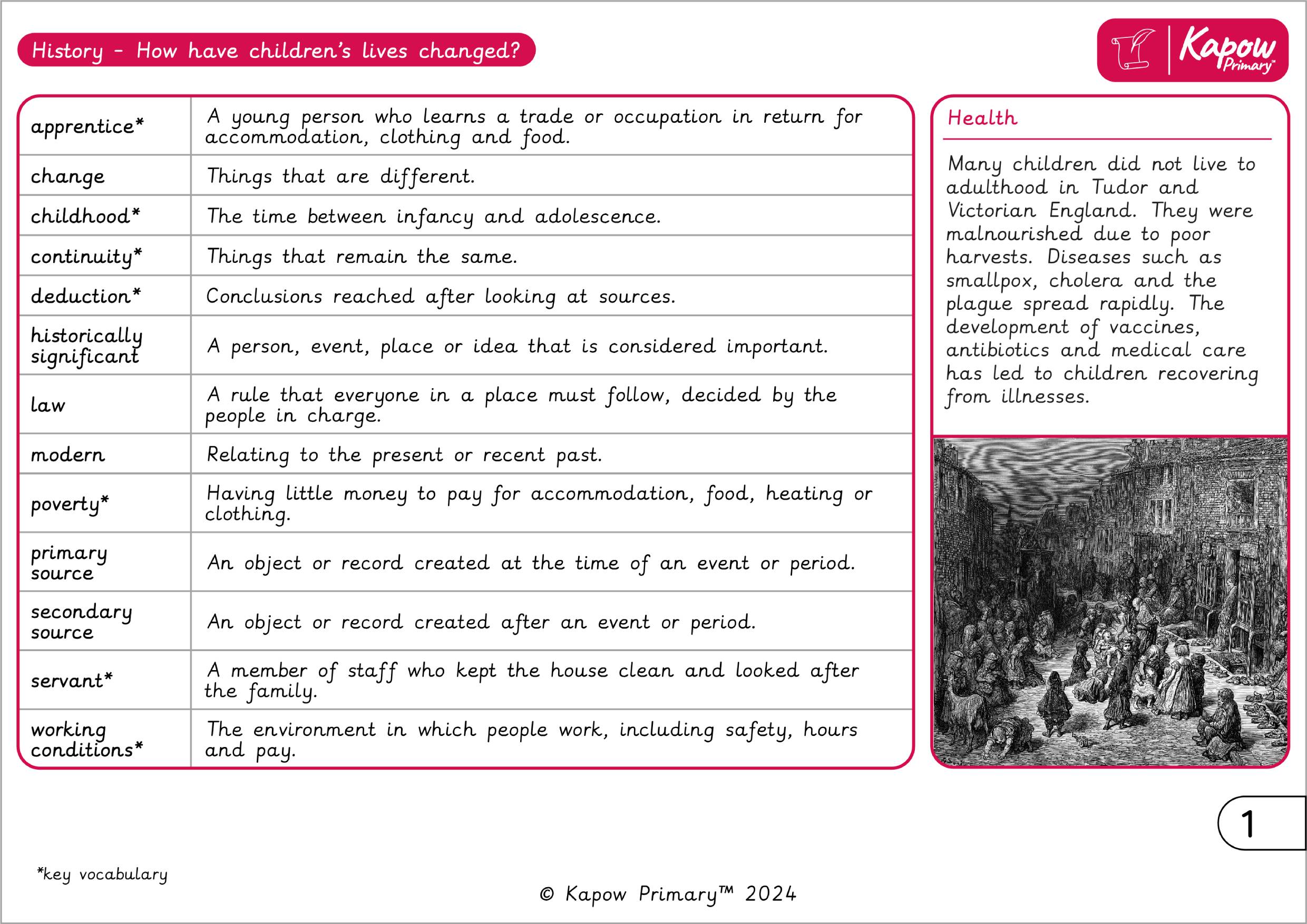
Knowledge organiser – History Y4: How have children’s lives changed?
Aimed at pupils, two pages providing key facts and definitions from the unit 'How have children's lives changed?'.
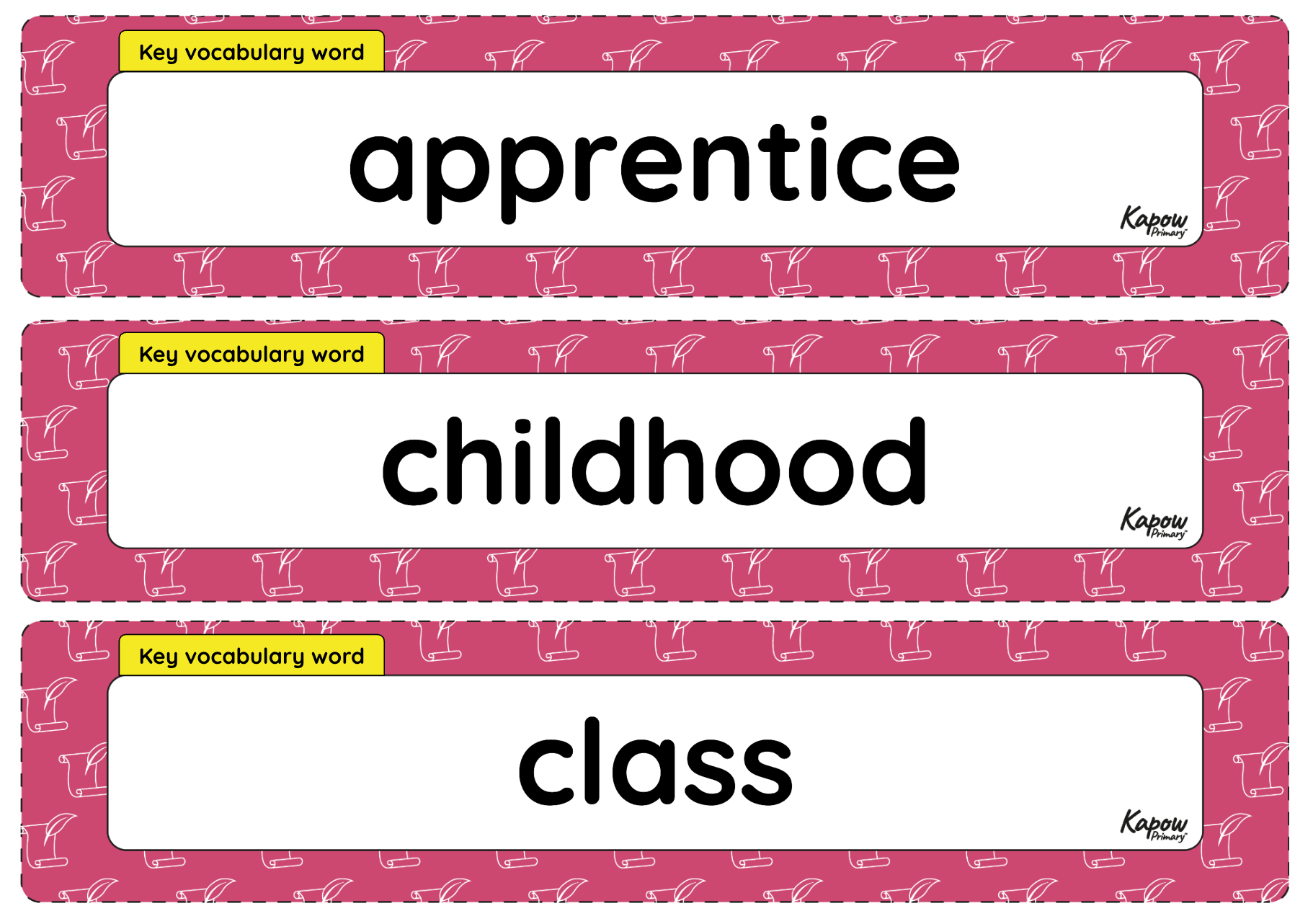
Vocabulary display – History Y3/4 (B): How have children’s lives changed?
A display version of the key vocabulary from the 'How have children's lives changed?' unit.
Subject resources
This content is for subscribers only. Join for access today.
Cross-curricular opportunities
English: Spoken language, Reading comprehension
Science: Working scientifically
Build on the learning
Y3/4 (B): What was important to ancient Egyptians?
Get started
