




Unit outcomes
Pupils who are secure will be able to:
- Recall some life processes, giving examples of how they apply to plants and animals.
- Match different plants and animals to their habitats.
- Give examples of how animals use their habitat for food and shelter.
- Recall that plants produce their own food for energy.
- Name living things that are producers and place a producer at the beginning of a food chain.
- Use arrows to show the order in a food chain.
When working scientifically, pupils who are secure will be able to:
- Classify objects into alive, never been alive and was once alive, giving reasons for their choices.
- Carry out research to find answers to questions.
Please note that Kapow Primary Science lessons are designed to be 1 hour and 30 minutes long to reflect the requirements of a core subject.
Note: during this unit, observe seasonal changes in winter. Allow the pupils to complete the Activity: Observing seasons over time (see Science, Y1/2 (A), Seasonal changes, Lesson 5: Observing over time).
Suggested prior learning
Lessons
Y1/2 (A): Lesson 1: Life processes
Y1/2 (A): Lesson 2: It feels good to be alive
Y1/2 (A): Lesson 3: Introduction to habitats
Y1/2 (A): Lesson 4: Woodland habitats
Y1/2 (A): Lesson 5: Rainforest and ocean habitats
Y1/2 (A): Lesson 6: Food chains
Key skills
Posing questions
- Exploring

This content is for subscribers only. Join for access today.
Key knowledge
To know:
-
This content is for subscribers only. Join for access today.
Key vocabulary
alive
carnivore (Y1)
This content is for subscribers only. Join for access today.
Equipment list
Equipment needed across all lessons in this unit.
This list does not include equipment which is usually readily available in the classroom (e.g pencils, A4 paper etc)
 Download
Full equipment list for the subject
Quantities marked × will update. Items without quantities are unaffected
- Clipboards ×30
- Sticky tack
- Devices with internet access ×15
The equipment below is optional
- Video recording devices ×1
This content is for subscribers only. Join for access today.
Related content
Unit resources


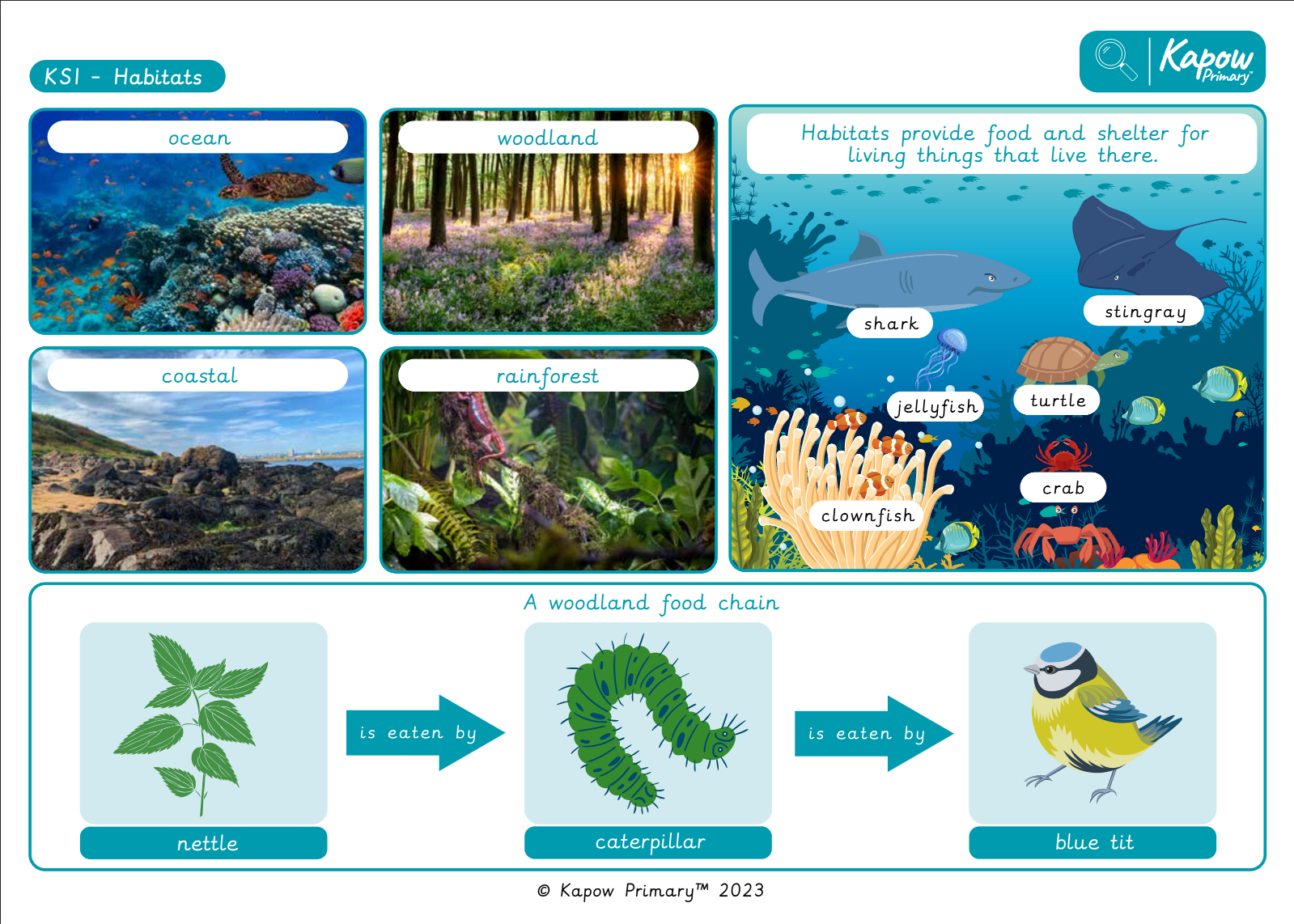
Knowledge organiser – Science Y1/2 (A): Living things: Habitats
Aimed at pupils, a single page which gives key facts and definitions from the mixed-age unit ‘Habitats’.
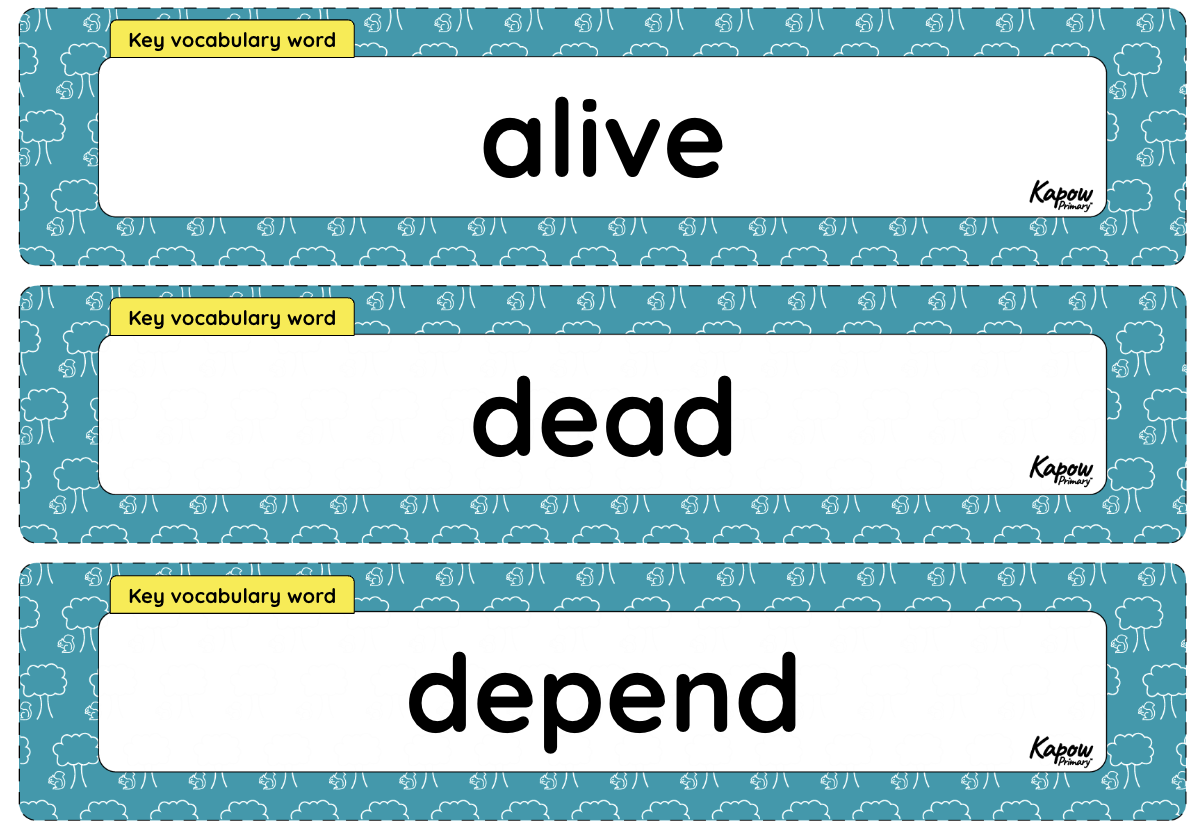
Vocabulary display – Science Y1/2 (A): Living things: Habitats
A display version of the vocabulary for the mixed-age unit ‘Habitats’.
Subject resources
This content is for subscribers only. Join for access today.
Cross-curricular opportunities
English: Spoken language; Writing – vocabulary, grammar and punctuation.
Computing.
British values: Mutual respect.
Build on the learning
Y1/2 (A): Plants: Plant growth
Get started
